Can Honeycomb Paper Sheets Be Used for Protective Retail Shelf Packaging?

When we talk about protective packaging, most people immediately think about shipping boxes. But product protection does not begin when an order leaves the warehouse, and it does not end when the package reaches the customer.
Retail products also need protection while they are being stored, displayed, handled, and moved around a store.
A product sitting on a retail shelf may be picked up several times by customers. It may be moved during stock management, placed next to other products, or transported from a storage area to the sales floor. For products with delicate surfaces, edges, glass components, or premium finishes, these everyday movements can create a real risk of damage.
This raises an interesting question: Can Honeycomb Paper Sheets be used for protective retail shelf packaging?
The short answer is yes, for many suitable applications.
At EcoCushion Paper, we see honeycomb paper as a flexible paper-based protective material that can be considered not only for shipping but also for retail handling, storage, product presentation, and secondary protection.
Let's understand where it can make sense.
What Are Honeycomb Paper Sheets?
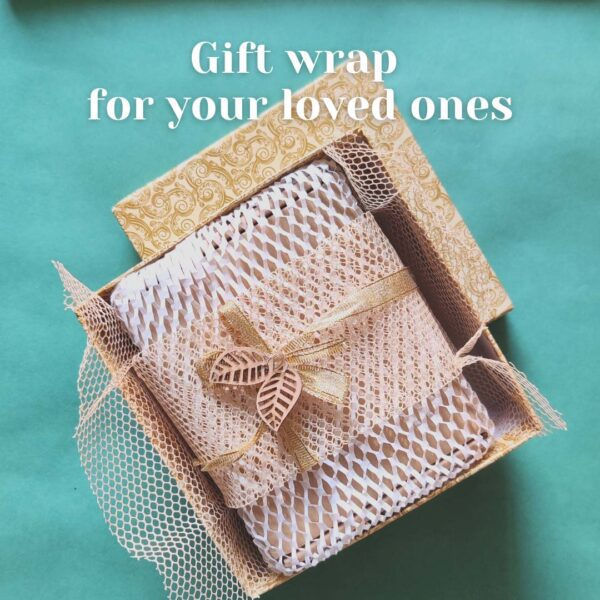
Honeycomb Paper Sheets are paper-based protective materials designed with a honeycomb-style structure. When the material is expanded, its interconnected cells create a flexible layer that can be wrapped around products.
This structure makes the material useful for applications where businesses need a protective layer without relying entirely on conventional plastic cushioning.
Depending on the product, honeycomb paper can be used for:
Wrapping products
Protecting surfaces
Separating individual products
Adding cushioning
Supporting retail storage
Protecting products during internal handling
Preparing products for shipping
The exact performance depends on the material specification and how it is applied.

Why Does Retail Shelf Packaging Need Protection?
Retail shelves may appear calm compared with the shipping environment, but products can still experience plenty of movement.
Think about what happens during a normal retail cycle.
Products arrive at a store, are unloaded, moved into storage, taken to the sales floor, arranged on shelves, picked up by customers, returned to shelves, and eventually purchased.
Some products go through this process many times.
For fragile or premium products, repeated handling can cause:
Scratches
Surface marks
Scuffed packaging
Minor impacts
Product-to-product contact
Damaged edges
Label damage
A protective paper layer can help reduce some of these risks.
Where Can Honeycomb Paper Sheets Be Used on Retail Shelves?
The answer depends heavily on the type of product.
There is no reason to wrap every retail product. Instead, businesses should identify products that genuinely benefit from additional protection.
Glass Products
Glass bottles, jars, containers, and decorative glass products can benefit from protective wrapping during storage and handling.
A honeycomb paper layer can help separate glass surfaces and reduce direct contact between products.
For example, a retailer displaying premium glass bottles could use paper-based protection when products are being transported from the stockroom to the shelf.
Cosmetics
Many cosmetic products come in glass containers or premium packaging.
Perfume bottles, skincare jars, cosmetic containers, and gift sets can have delicate surfaces that need to remain presentable.
Honeycomb paper can be considered for protecting individual products during movement or storage.
Home Décor
Retailers selling vases, decorative objects, ceramic products, and other home accessories often deal with fragile inventory.
A protective paper layer can help minimize surface contact while products are moved around the store.
Gift Products
Gift packaging needs to look good.
A scratched box or damaged decorative surface can reduce the perceived value of a product.
Honeycomb paper can provide an additional layer of protection during internal handling without necessarily requiring bulky plastic cushioning.
Can It Protect Products While They Are on the Shelf?
This is where businesses need to think carefully.
Honeycomb paper is generally more useful as a protective wrapping or separation layer than as a permanent display material for every retail product.
For example, if a product is individually wrapped before being placed into a storage carton, honeycomb paper can help protect it during transportation and handling.
But if the product needs to be fully visible on the shelf, completely wrapping it may not make sense.
Instead, retailers can use honeycomb paper during:
Backroom storage
Stock transfers
Shelf replenishment
Internal transportation
Product bundling
Pre-sale handling
The packaging strategy should match the retail environment.
Honeycomb Paper Can Help Reduce Product-to-Product Contact
One simple but important function of protective packaging is separation.
Imagine a shelf containing multiple glass jars. Every time a worker moves one jar, it may come into contact with another.
Repeated contact can lead to scratches, label damage, or chips.
Honeycomb paper can be used as a separation layer between suitable products.
This can be particularly useful when products are temporarily packed together before reaching the shelf.
The idea is not to create excessive packaging. It is to create enough separation to reduce avoidable contact.
Does It Make Retail Packaging Look More Premium?
Packaging presentation matters, particularly for premium brands.
A carefully wrapped product can create a different impression from one surrounded by excessive plastic materials.
Honeycomb paper has a distinctive paper texture and structure that can support a more natural packaging appearance.
For brands positioned around craftsmanship, sustainability, handmade products, or premium presentation, paper-based protection may fit naturally with the overall brand identity.
However, appearance should never be the only reason to choose it.
The material must also be suitable for the product and the intended application.
What About Products That Are Already Boxed?
Honeycomb paper can still have a role.
A boxed product can be vulnerable to external scuffing, especially when several boxes are stored or transported together.
For example, a retailer may have premium gift boxes that need to remain visually clean.
A paper-based protective layer can be placed between products or around groups of products during storage and movement.
This can help reduce friction and direct contact.
Again, the goal is targeted protection rather than unnecessary packaging.
Can It Replace Plastic Packaging in Retail?
In some applications, it can replace certain plastic protective materials.
But businesses should avoid assuming that every plastic application has a direct paper replacement.
Different materials have different characteristics.
When considering a switch, retailers should ask:
What does the existing plastic material actually do?
Does it provide cushioning?
Does it prevent scratching?
Does it keep products separated?
Does it protect against moisture?
Does it hold several items together?
Once the function is understood, the business can determine whether honeycomb paper is suitable for that specific job.
Retail Packaging Should Be Designed Around the Product
One of the biggest mistakes businesses make is choosing packaging first and trying to make the product fit afterward.
It is better to work in the opposite direction.
Start with the product.
Ask:
Is it fragile?
Does it scratch easily?
Is it made from glass or ceramic?
Does it have a premium finish?
Does it need protection from other products?
How often will it be handled?
Does it need to remain visible?
How long will it remain in storage?
The answers help determine whether honeycomb paper is useful and how much should be used.
Avoid Over-Packaging Retail Products
Sustainability is not achieved simply by switching from plastic to paper.
Using unnecessary amounts of paper can also increase material consumption.
A better approach is to use protection strategically.
If two products can be safely separated with a small amount of material, there may be no reason to use a large quantity.
Retail businesses should also consider the size of the product and packaging.
Efficient packaging means using enough material to perform the required protective function without creating unnecessary layers.
Honeycomb Paper Can Support Internal Retail Logistics
Retail businesses often move products several times before the final sale.
The product may travel:
Supplier → Warehouse → Store → Stockroom → Shelf → Customer
Each movement creates another opportunity for contact or handling damage.
Honeycomb paper can be incorporated into selected stages of this journey.
For example, a retailer could use it when transferring fragile products between locations or when moving premium inventory from storage to display areas.
This makes honeycomb paper more than a shipping material. It can become part of a broader product protection strategy.
How Should Retailers Test It?
Before making a large packaging change, retailers should conduct a small trial.
Choose a few products that are suitable for testing.
Compare the current packaging method with honeycomb paper.
Pay attention to:
Product condition
Surface protection
Handling time
Material consumption
Storage requirements
Ease of use
Customer presentation
Overall packaging cost
The test should reflect real retail conditions.
If products are frequently moved between shelves and storage areas, test the material under those circumstances.
The Role of EcoCushion Paper
At EcoCushion Paper, we focus on paper-based protective packaging solutions designed for businesses that want practical alternatives for product protection.
Our honeycomb paper solutions can be considered for suitable retail products where businesses need wrapping, cushioning, or separation.
We believe the right packaging decision should be based on the product rather than simply following a packaging trend.
For a retailer, that could mean using honeycomb paper for fragile glass items, premium products, gift sets, ceramics, or other products where additional protection makes sense.
The objective is simple: protect the product efficiently while avoiding unnecessary packaging.
Is Honeycomb Paper Suitable for Every Retail Product?
No—and that is perfectly normal.
A durable plastic product may not require protective wrapping at all.
A moisture-sensitive product may require a different type of packaging.
A highly fragile item may need multiple protective layers.
Honeycomb paper should therefore be viewed as one potential packaging solution rather than a universal answer.
The best packaging system depends on the product, environment, handling process, and level of protection required.
Final Thoughts
So, can Honeycomb Paper Sheets be used for protective retail shelf packaging?
Yes, particularly for fragile, premium, or easily scratched products that need additional protection during storage, internal transportation, shelf replenishment, or handling.
The biggest advantage is their flexibility. They can be used for wrapping and separating suitable products while giving businesses an opportunity to incorporate more paper-based protection into their retail packaging process.
For retailers considering the change, the smartest approach is not to replace everything at once.
Start with products that genuinely need protection. Test the material in real retail conditions. Measure product safety, material usage, handling time, and cost. Then expand the application if the results make sense.
At EcoCushion Paper, we believe effective packaging is about finding the right balance between product protection, packaging efficiency, presentation, and responsible material choices.
When used thoughtfully, honeycomb paper can have a useful role beyond the shipping box—and retail shelf protection is one area worth exploring.


Comments